Trigger Empathy: Creating spaces for women to tell their stories
By Mahira Ahmed
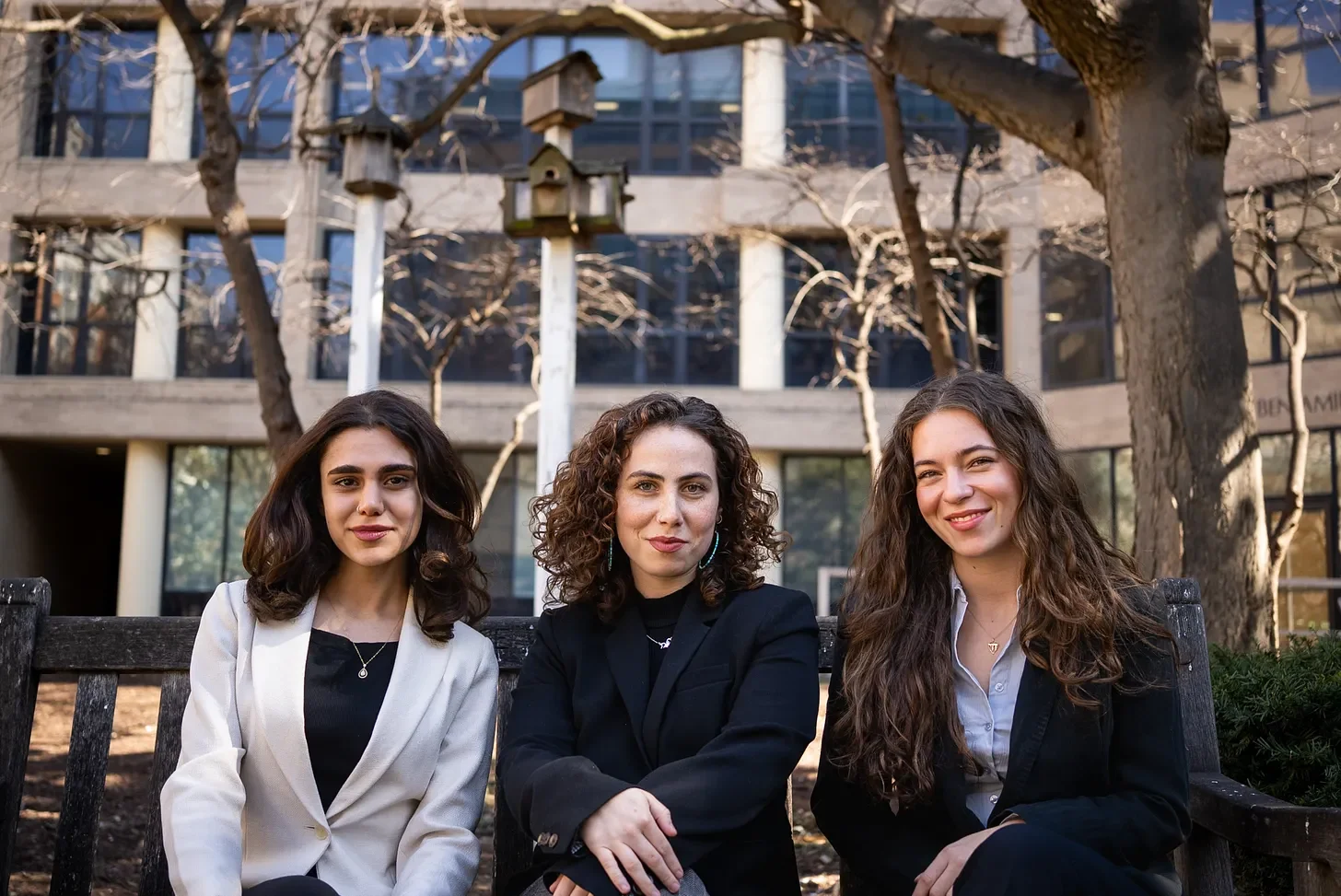
One year ago, three women on GW’s campus came together to build a nonprofit that would provide a platform to share the perspectives of women in global conflict. The seeds they had planted are now growing into the hearts of many students at GW.
Ella Kushins, a second year student double majoring in political science and gender studies, discussed in an interview how the idea began. “In January of 2025, Natasha [co-founder] brought me to a peacebuilding event on campus, and while the event captured my attention and interest in peacebuilding, I was bothered by how the woman who spoke was talked over. After the event, I went to Natasha with an idea to create our own space, specifically for women’s perspectives, in conflict resolution and peacebuilding. She lit up, and instantly contributed amazing ideas for not just a collective, but a non-profit and a movement.”
Natasha Halbfinger, a third year student majoring in international affairs with a concentration in conflict resolution, was immediately hooked to the idea. “The gaps I’d noticed in my classes and among my peers felt like something we could truly have an impact on. Without hearing directly from women on the ground in conflict zones, I believe future policy and changemakers are at a disadvantage,” Halbfinger said.
Empathy is at the heart of this organization. Kushins described the origin of the nonprofit’s name. “We actually came up with the name the first night that Natasha and I brainstormed. We knew we wanted the word “empathy” in the title, but had been floating a couple of different options,” Kushins said. “I’m not sure, actually, who wrote Trigger Empathy in the brainstorming document, but when we said it out loud, it sat right with us.”
Soon after, Lara Jalal, a second-year student studying international affairs with a concentration in security policy and the Middle East, joined the team. “As a woman born and raised in the Middle East, I noticed a significant gap in my International Affairs courses. The focus was overwhelmingly on policy, with little attention given to the perspectives of women and minority communities on the ground. It was hard to not feel underrepresented, both in the curriculum and in broader conversations with my peers. So when Natasha, whom I met in a Middle Eastern history class, brought this idea to me, I was immediately on board,” Jalal said.
The group applied for microgrants to fund their nonprofit, and signed with a local law firm pro-bono that is helping them gain 501(c)(3) status, which will allow Trigger Empathy to accept tax-exempt donations.
“We’re about to launch our website and a fundraising campaign, for operating costs associated with applying for that 501(c)(3) status. Our hope is that once we secure tax-exempt status, we will be able to apply for (and secure) more grants and donors who will support our initiative as it grows,” Halbfinger said.
In the past year, the team has been sponsored by the Kimberly and J. Robert Humphries Scholarship, an Award from the GW Women’s Leadership Program that assists recipients in their professional projects.
What is their goal?
As the organization’s first Instagram post states, “Our budding non-profit invites women from conflict zones around the world to intimately share their experience with small groups to college students.” Halbfinger and Jalal express their initiative further.
“All over the world, women are disproportionately marginalized and affected by violence in conflict zones. Our initiative focuses on highlighting and uplifting these lived experiences. Trigger Empathy works to expose college students to real, raw personal narratives, aiming to leave each attendee with an authentic connection to the speaker,” Halbfinger said.
The team builds a resource sheet that is curated for each event, with book, movies, blog, and academic recommendations from speakers and existing research. The organization aims to publish these resource sheets and have them available for the general public on their future website, in which they will also present event features.
“Women experience unique and often intersectional challenges in conflict, and their perspectives are frequently overlooked. Without hearing directly from those most affected on the ground, it’s difficult to fully understand the realities of conflict and how distinct each situation can be,” Jalal added.
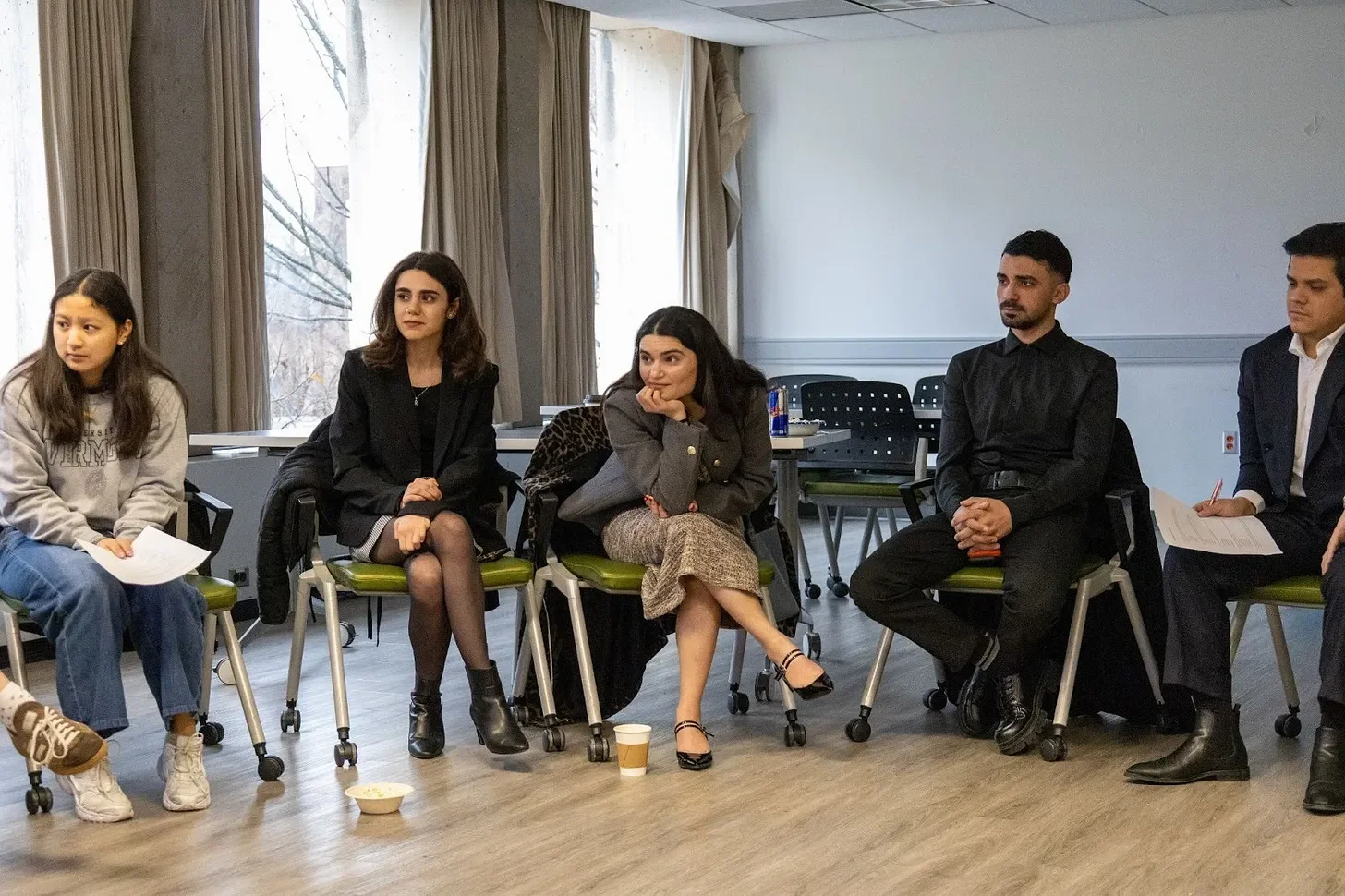
Their first event was hosting a conversation with a Palestinian woman from the West Bank and in the fall, the three co-founders welcomed an Afghan woman. Now this spring, they hosted Mediha Alhamad, a Yazidi woman from Iraq to tell her story in an intimate circle of students who listened attentively. The group provided the necessary historical and political context to our participants in order for the audience to understand Mediha’s story better.
“We set the tone of the room by asking each attendee to share why they’ve chosen to be there, emphasizing our intention of creating a safe space. Participants are encouraged to ask questions throughout the session, and the conversation flows – especially because we limit our sessions to a maximum capacity of 30 people,” Halbfinger said.
“After the discussion, we again ask each attendee to share what they’ve taken away from the session. When individuals are encouraged to reflect and communicate their thoughts and feelings, they’re more likely to take the experience with them. That’s what we’re trying to do here. If participants take their feelings with them to their future roles in leadership and policymaking – we’ve proven our hypothesis. Empathy is necessary.”
The team expressed that the best way to support them is by attending their events. The group builds their invite list based on demonstrated interest. Right now, they are testing the strategy of using Instagram (@trigger.empathy) to find attendees.
If you are interested, be sure to follow them there or on their LinkedIn for updates. The nonprofit continues to grow, so be sure to check them out!