
Love at First Swipe?
By Nina Rodriguez
It’s a chilly Sunday morning in Brooklyn, and 31-year-old New York transplant Maria Gomez spends another lazy day watching Netflix’s newest hit, cuddled up on the couch — alone. Trying to adjust to her new life of solitude after ending a six-year relationship, she scrolls through Hinge and embarks on a conversation with her most recent “liker”. Could it be love at first swipe?
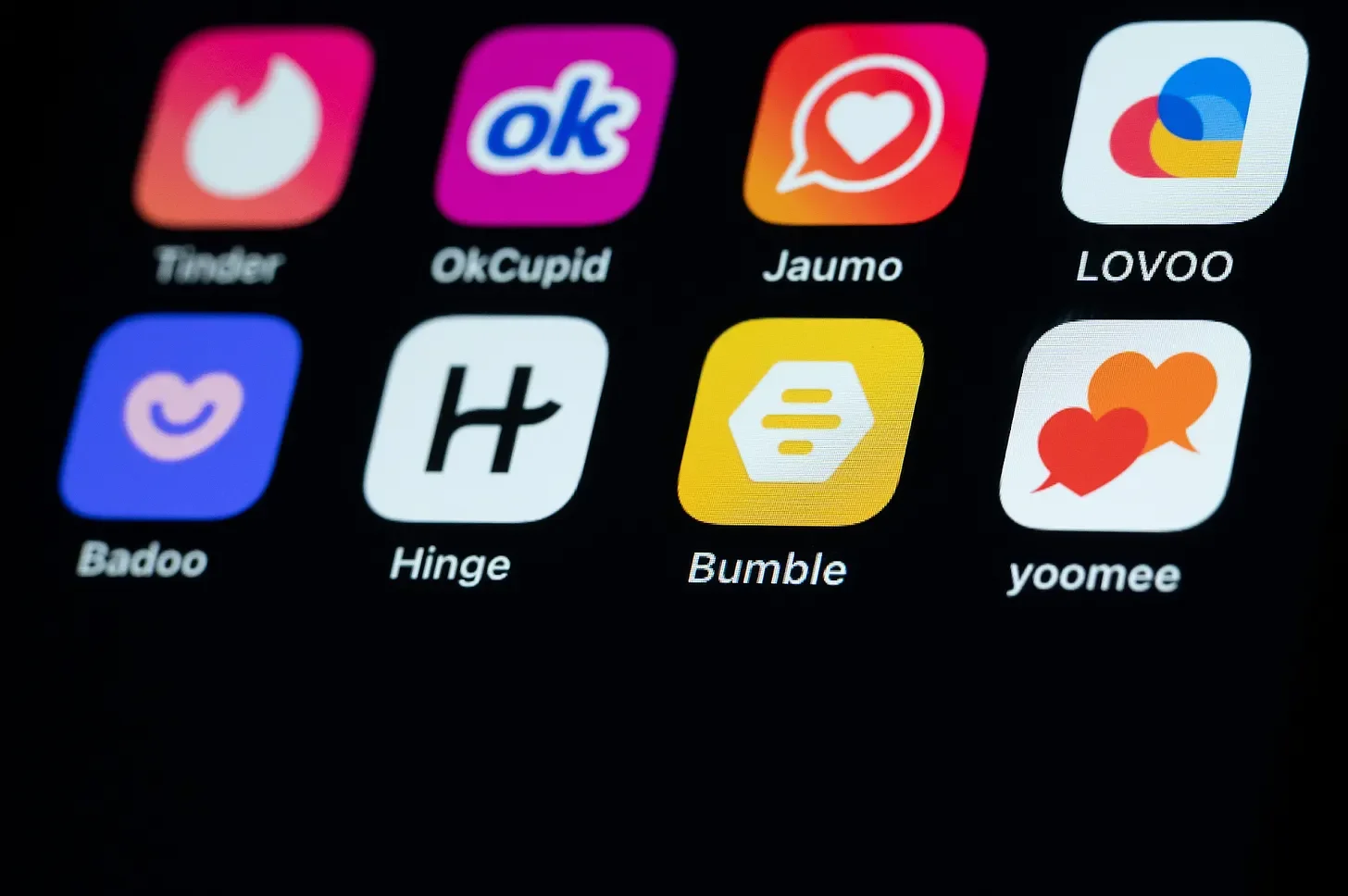
Dating apps have swarmed the nation, becoming one of the most popular ways for young people to meet. In 2023, about 60 million Americans were using dating apps. About 53% of those users were millennials, like Maria.
“Something just kind of drew me to him, even though it was just answering a stranger. It felt genuine,” said Maria Gomez.
Eleven years ago, Maria moved from a small provincial island in the Philippines to the Big Apple. With an overwhelming number of people to meet and a constantly bustling city to explore, dating apps streamlined that process.
With many cousins and family friends from the Philippines already in the states, she found her cure for homesickness — but not her immersion into a new world. That’s where the dating apps came into play.
“The benefit of meeting someone on the app widened my social circles. Whether you are dating someone or just meeting people, you want to bring newness into your life. In both cases, it was a different part of someone else’s world that I wanted to get to know,” said Gomez.
The name “dating app” can be misleading — almost a majority of users are not even interested in a romantic connection. According to Statista, 34% of users just want “something interesting to do,” and 25% want to make platonic, non-romantic connections. This was the mindset of 23-year-old Maria, who mindlessly scrolled through Tinder trying to find her groove in New York.
In her 20s, Maria had the quintessential life of a young woman in New York City. She made lifelong friends, the best of memories, and discovered the good, the bad and the ugly of the NYC dating scene. Out of her suitors over the 11 years, only one of them — the most successful one — was from an app.
As she got more comfortable with her life in the city, her social circle naturally grew and she started to wean off the apps. After fully indulging in numerous meet-cutes, she met her first serious NYC boyfriend — Hector.
They met through mutual friends and began a six-year relationship when she was 25 years old. Unfortunately, Hector was not the one, leaving 31-year-old Maria to revert back to the apps with new wisdom, maturity and outlook.
“Honestly, it was just for the practicality of things. I have more responsibilities now. I don’t have the time or patience to go through all of the cat-and-mouse games of figuring out what the other wants. The apps kind of eliminate all those barriers,” said Gomez.
After her relationship ended, Maria returned to the apps, specifically Hinge. Tagged as “the dating app designed to be deleted,” each user’s profile features a series of photos, personality characteristics such as religion, political views, hometown,languages spoken, as well as conversation-starting prompts.
Six years prior, her time on the apps was exclusively for fun, never to find a life partner. She mainly used Tinder, where she would swipe left or right after one glance at someone’s profile picture, often judging it with her girlfriends at their weekly happy hour. In her 30s, with a more intense job, higher level of responsibility and less patience for playing around, she found Hinge to be more attuned to her lifestyle.
She usually spends her weekends relaxing and recharging from a long week of work. One chilly Sunday night in January 2022, she was lying on the couch mindlessly scrolling through Hinge when she stumbled across Sam’s profile.
“There was an air of confidence to his profile. In my head, I was like, ‘OK, I feel like there’s something about this one.’ Even on a profile or a photograph, I can read the person. I mean, I guess not everyone is always who they seem, but I had no doubts about him,” said Gomez.
A never-ending game of 20 questions enthralled the pair to keep messaging on the app. They went back and forth asking each other blunt questions ranging from “What’s your favorite color?” to “Have you ever cheated on anyone?” — allowing Maria to authentically trust the man behind the profile.
“The thing about it was that it was almost like a game. I’m competitive by nature and so is he. So obviously, we answered as honestly as possible, and it just kept getting deeper and deeper after that. The questions were more direct and thought-provoking in the sense that I couldn’t keep my guard up,” said Gomez.
After about a month of messaging, they finally went on their first date.
He picked her up. He took her to a charming little bistro in the West Village. They chatted over a delicious array of appetizers and rich wine. He took care of the bill and walked her to the subway. Sam was the perfect gentleman.
The conversation was spark-filled. The date was romantic and sweet. Their chemistry was undeniable. That evening in February was the start of an incredibly beautiful relationship.
All it took was one swipe, and Maria found her prince charming.
Is it really that simple these days? Surely the most digital generation, Gen Z, should be embracing this newfound algorithmic romantic standard, right?
“I can 100% promise you that my husband is not on a dating app,” said Ana Patel, 19.
“There is no more romanticism. That’s why the bare minimum is hyper-romanticized. Thank you, dating apps!” said Raquel Roberts, 21.
Wrong.
Generation Z seems to have snubbed dating apps from their array of digital addictions. A survey of American college students reported that 79% of them do not regularly use dating apps. And compared to the 53% of millennial users, only 22% of dating app users were part of Generation Z.
So why is it that the generation infamous for brain-rotting vocabulary, concerningly high screen times and sourcing their news from trending social media posts hates dating apps?
A rebel to standards of the digital age, 21-year-old Raquel Roberts has never once downloaded a dating app.
“I just wouldn’t do that. Honestly, I am just someone who’s very stubborn, and I want to meet someone the way my parents met, or in a way that’s similar to all of these generational meet-cute stories,” said Roberts.
Raquel dreams of a chance meet-cute with a man who fulfills standards beyond the screen. To her, the algorithmic nature of dating apps makes dating resemble a machine. Part of the experience she is looking for comes from the fun of discovering the mysteries of a suitor.
She also attributes most of her disappointments in the dating scene to the emergence of online dating.
“Social skills and having the ability to walk up to someone and strike a conversation is very important to me. With dating apps, guys can bypass the whole process of going up to someone at the bar, striking up a conversation and buying them a drink, which can waste time and money. But it’s so sad that so many people are willing to bypass that,” said Roberts.
The convenience of the apps, where you can tune your profile to match only with users who fulfill every one of your requirements, has diminished the dating skills preceding generations had to perfect. Maria, Raquel and Ana all failed to remember a time when they witnessed a classic in-person meet-cute in recent months.
Before the times of Tinder, if a guy opened the door for a girl, no one batted an eye. In the post-Tinder world, a meaningful conversation beyond the apps is rare, and opening the door for a girl can carry the same weight as proposing. Raquel attributes this “hyper-romanticism of the bare minimum” to dating app normalcy.
Although a college campus hosts thousands of young adults in the same stage of life with the same romantic expectations within blocks of one another, the best place to find romance is still an app. Despite campuses being a prime in-person dating scene, users, including Ana, have expressed the same frustrations as Raquel.
“We’ve reached a point of deterioration in our generation. I think what really drives it is that we’ve started to look at people as just objects we can like or dislike, rather than the gray area of exploring relationships and the person themselves,” said Patel.
Since arriving at George Washington University, Ana has been a regular user of dating apps, specifically Tinder and Hinge. Curiosity about exploring a new city and a sense of peer pressure contributed to her choice to create a dating profile.
The apps synthesized the dating pool in D.C. and definitely left Ana with the best stories. However, like many other Gen Z users, Ana used these apps for fun. When she was feeling like going out to dinner and striking up a conversation, she opened Hinge.
Since joining the apps, Ana has tried the coolest restaurants, walked through the city’s best curated museums and checked off almost every tourist attraction on her D.C. bucket list. Her revolving door of companions expanded her social circle, ranging from men from San Francisco to London to Denmark.
However, she was adamant about never forming a serious connection with someone she met on the apps. The keyword in the previous sentence is “was.”
“I think dating apps have turned human beings into commodities; the profiles are basically a superficial advertisement. With that being said, contradictingly, the most incredible connection I have ever had was with a guy I met on Hinge,” said Patel.
In December 2024, Ana was sitting at her desk taking a much-needed study break from finals when she indulged in her daily routine of opening Hinge, checking who liked her profile, having a sufficient ego boost, and closing the app. But this specific day, she lingered a little longer on the profile of one of her likers — Andrew.
Andrew is also a student at George Washington University. With only one year and a few blocks between the two, can Hinge’s algorithm be attributed to a meet-cute in this situation? Is a swipe more successful than walking the streets of your college campus?
Andrew had liked a photo on Ana’s profile and sent a sarcastic compliment aimed to grab her attention. And it did.
Ana sent back a witty response, and the conversation took off from there. They texted almost every day over winter break.
“We immediately connected. He got my wit. He got my humor. All of these connections happened over text, which has never happened before,” said Ana.
They went on a very romantic first date and immediately couldn’t stay away from each other. They spent almost every day together. Ana described her situation with Andrew as “the most intense connection” she has ever had.
After a few months of dating, the schedules of two overachieving GW students got in the way of their romance, leaving Ana back to the apps. Although she experienced this mind-blowing connection, she is still persistent in classifying the men on the apps as casual dates and funny anecdotes to joke with her girlfriends about.
Although the negative perception of the apps from the Gen Z girls can be quite harsh, they might have gotten something right.
“If I were still in my late teens and early 20s, I wouldn’t have wanted to have rushed anything like the apps can sometimes do. All of those organic experiences were great learning curves. But at my age now, I had enough of those experiences when I was younger, so now I just want to get through all that fluff. Just tell me what you want and what type of person you are so we can skip all the trying to figure this out and wasting the time,” said Gomez.
So, for now, Gen Z is dismissing the dating apps and embracing the stage of life to date the bad choices, make rash decisions and unfold the mysteries of the people they meet. And maybe in a decade, if they haven’t found their perfect match yet, they might open up whatever algorithmic fad has swarmed the apps and revisit digital romance.
Source: https://qz.com/emails/quartz-obsession/1851752525/dating-apps-tinder-bumble-technology-business