
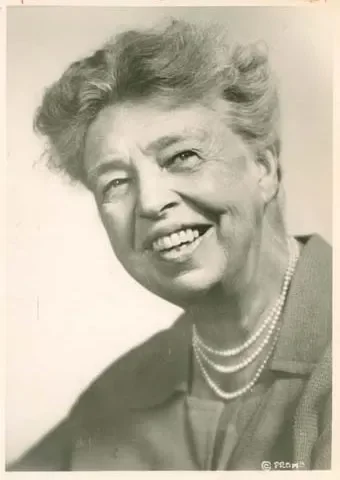
My Favorite Woman In History
By Mahira Ahmed
If you meet me, I’ll probably talk about recent pop culture media drama or the most recent animated movie release, but frankly I loveto talk about history. Specifically, the ladies in history that are seldom discussed. In honor of the end of Women’s History month, here are my top 3 women (from an exhaustive list of many) that have achieved so much in their time.
Mary Seacole
Source: Lincoln Center Theater
“….and the grateful words and smile which rewarded me for binding up a wound or giving a cooling drink was a pleasure worth risking life for at any time.”
Middle school Mahira would be over the moon to know that Mary Seacole is still an everyday role model in her life. I had first met her through primary sources when I had to write an illustrious essay about a historical figure who broke barriers for my National History Day project. The project was a nightmare, but her story was inspirational. Known as the forgotten hero, she gives Florence Nightingale a run for her money. Mary Seacole was born in Jamaica to a Creole mother and a Scottish father, and despite her being labeled as a free person, had gone through multiple trials of racial discrimination that she would not let stop her life.
In 1854, Seacole traveled to London where she heard... about the upheaval of the Crimean War and wants to aid the soldiers. She applied to the War Department in London to join Florence Nightingale as a nurse, but she was turned away on the grounds that ‘no more nurses were needed.’ Mary knew better, expressing in her book, Wonderful Adventures of Mrs. Seacole in Many Lands, “Doubts and suspicions rose in my heart for the first and last time, thank Heaven. Was it possible that American prejudices against colour had some root here? Did these ladies shrink from accepting my aid because my blood flowed beneath a somewhat duskier skin than theirs?”
When the government turned her away, she became determined to prove society wrong and make an impact. She travelled across to Balaclava and established “The British hotel” which offered both meals and supplies to officers and soldiers during the Crimean war, also offering hospitality and nursing the wounded.
Her story is particularly important to me because it shows me that despite what prejudices people have against you, you can still achieve what you want. With Seacole’s efforts, she was able to save hundreds of soldiers. Her legacy is now established with a statue in London!
Noor Inayyat Khan
Source: BBC
“Liberté”
Noor Inayyat Khan was not your conventional spy. She was the descendant of Indian royalty, with a father who was a Sufi preacher that travelled playing music in America, which led him to meet her mother, an American. This unconventional meet-cute would lead their eldest daughter to be a perfect candidate to be a British spy during World War II.
Khan and her family went to England to volunteer for the war effort, and she joined the Women’s Auxiliary Air Force and trained to become a radio operator. Khan was the first female wireless operator to be dropped into occupied France to help the resistance and send messages back to Britain.
One fascinating aspect of her role is that she was known to be a little bit clumsy. Her colleagues in the intelligence network pointed out that she had unthinkingly revealed her British background by pouring milk into cups before the tea. I think we often think about historical figures as these untouchable people, but this fact shows that she is human, just like any other person.
Yet, she strengthened to be one of the top spies–but her power made her vulnerable. A betrayal led German soldiers banging on her door in France, taking her to a German prison. She was regularly beaten, and after many months, was shot. Her last words were “Liberté.” Truly her story is one of bravery, and I will always remember her story as one of the many that impacted lives in World War II.
Eleanor Roosevelt
“It is the person and not the sex which counts.”
Source: National Park Service
Look, everyone has to know Eleanor Roosevelt. I mean–she’s on the quarter! She has a special place in my heart because surprisingly, I didn’t like to read in elementary school. One of the only books I actually found herself enjoying was a biography of none other than Franklin Delano Roosevelt’s wife, titled Eleanor Roosevelt: Fighter for Social Justice by Ann Weil.
She was known as the “First Lady of the World”, and that was true!! During FDR’s presidency, she would visit relief projects, survey working and living conditions, and report back to her husband. She was called “the President’s eyes, ears, and legs.” One of her most notable acts was drafting the Universal Declaration of Human Rights. As commission chair, she was responsible for delivering exactly how all governments should be held accountable for their actions in citizenship, politics, property, religion or identity.
One of the coolest things about her was personally her newspaper column called “My Day.” She would speak out on a multitude of topics, including fighting against segregation, supporting the Brown V. Board of Education, mistreatment of the indigenous Navajo, calling out antisemitism in Europe, and so much more. In a time where first ladies of the United States were not expected to be so politically active, she was not afraid to use her platform to discuss important social issues. Her actions are a reminder to always speak out for what’s right!