
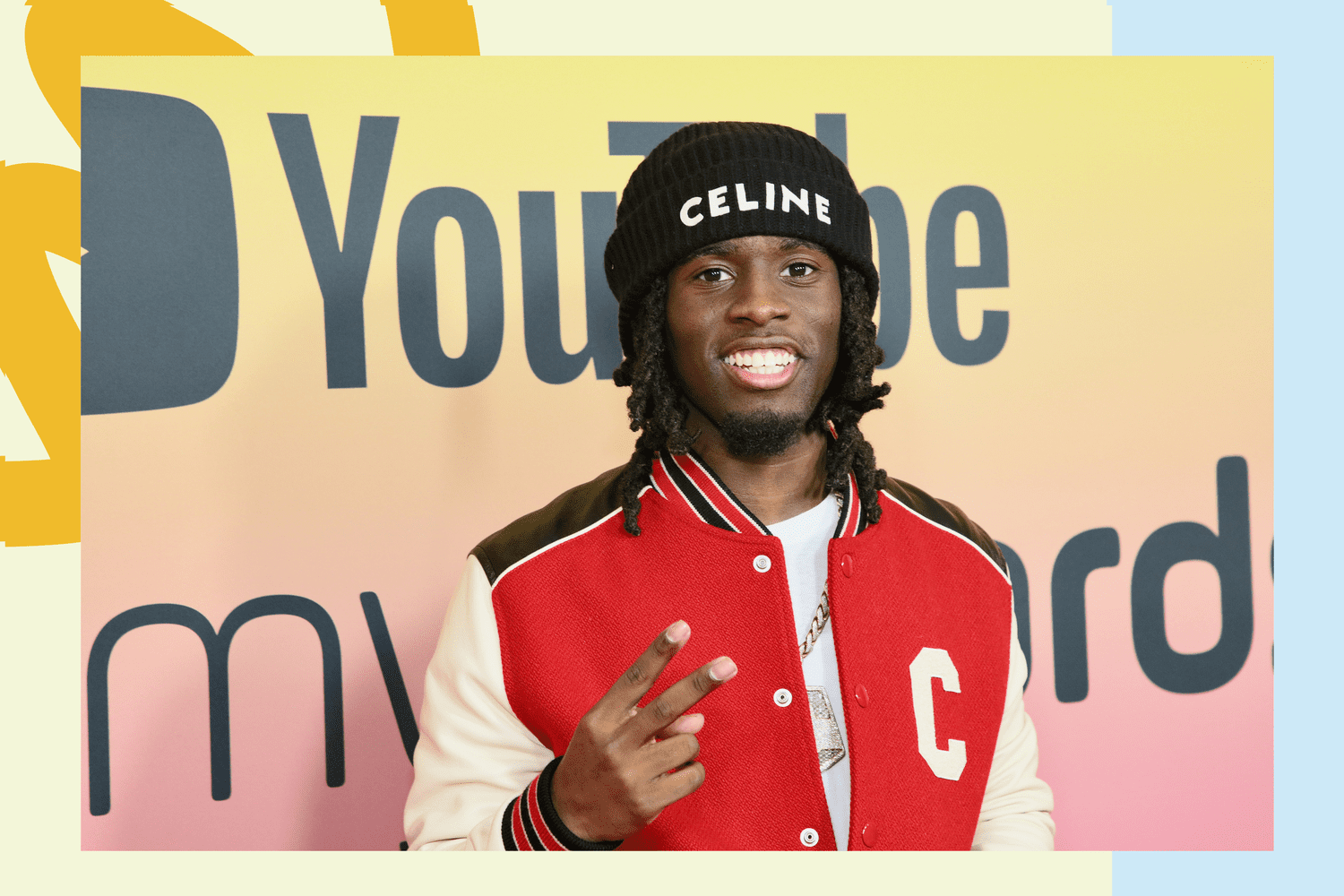
Clip That!: A Long-Winded Explanation of Twitch Streamers
By Taylor Malec
In June 2011, a new platform spun off from Justin.tv and rode the coattails of YouTube – a place where everything the viewer sees is happening in real time.
Unlike a YouTube video, a live stream can’t be edited to remove controversial moments; instead, creators have to brace for the risk in exchange for the reward of financial gain.
On this platform, one would not just get paid by ad revenue, but would be able to receive monetary donations, in the form of ‘gifts’ and ‘subs’ directly from the viewer.
And it took off.
Welcome to Twitch.
Sub-A-Thon!
So, how do Twitch streamers make money?
There are plenty of ways that are not unique to Twitch: ads, sponsorships, appearances.
What is interesting about Twitch is the presence of “subs.” Unlike YouTube, where you only have to have a free Google account to subscribe to a channel, Twitch has paid subscriptions.
According to Twitch’s website, subscribing to a streamer gives you access to various benefits that are unique to each streamer.
There are three tiers of subs: Tier 1 (4. 99/month), Tier 2(9.99/month), and Tier 3 ($24.99/month).
While it is different for each streamer, the different tiers usually give access to different benefits, getting more lucrative as you move up the tiers.
For example, top streamer Joe Bartolozzi offers these incentives for the different tiers:
Tier 1:
● No advertisements
● Base emotes
● Badge displayed in the chat
Tier 2:
● Extra emotes
● Upgraded badge in the chat
Tier 3:
● All emotes
● Exclusive badge
What Bartolozzi offers is what is deemed as the “standard” incentives for the subbing tiers. Other streamers may add extra incentives which are dependent on their category of streaming.
Since subs are a monthly subscription, they regularly fluctuate meaning that a streamer may not consistently be rising in subs.
This is one of two ways that the streamer makes money directly from Twitch (the other being ad revenue). On their website, Twitch states that a portion of the purchase price of the subscription goes directly to the streamer.
Since it has been established that more subs equals more money, Twitch streamers regularly participate in events called “subathons.”
According to Streamlabs, a subathon is a multi-hour (usually 24 hours or more) stream where the viewers can sub to the streamer to receive the usual benefits. What is different about these times is that each sub adds more time that the streamer has to remain on the stream; a subathon does not end until all the time runs out.
Meet the Players
Subscriptions are the clearest measure of who is winning on Twitch.
As of September 22nd, 2026, the top 20 streamers currently on the Twitch platform are:
1. IronMouse
2. PlaqueBoyMax
3. Jynxzi
4. Cinna
5. CaseOh_
6. KaiCenat
7. Caedrel
8. HasanAbi
9. ZChum
10. Eliasn97
11. StableRonaldo
12. Joe_Bartolozzi
13. xQc
14. DGThe99
15. VanillaMace
16. DDG
17. Tumblurr
18. ChristinaandAmber
19. Sreme
20. Zarbex
As of September 22nd, 2026, these are the top 20 streamers with the highest subscriber peaks in Twitch history:
1. KaiCenat
2. EveLone2004
3. Vedal987
4. JasonTheWeen
5. IronMouse
6. Ludwig
7. Ninja
8. Jynxzi
9. Ibai
10. casimito
11. Prestily
12. Cinna
13. Adapt
14. CriticalRole
15. StableRonaldo
16. Shlorox
17. RanbooLive
18. Lvndmark
19. Lacy
20. YourRageGaming
A few patterns stand out. Only five names appear on both lists – IronMouse, Jynxzi, Cinna, Kai Cenat, and Stable Ronaldo – a sign of how quickly the top of the platform turns over. VTubers, streamers who appear as animated avatars, hold some of the biggest spots: IronMouse leads the current ranking, and Vedal987, the developer behind the AI VTuber Neuro-sama, ranks third all-time. And four of the six founders of CORE, a streamer group, appear on the all-time list.
Living Large, Live on Air
Because Twitch is built around live, unscripted broadcasting, viewers get a level of access to their favorite creators that a traditional celebrity has never offered. Audiences don’t just see the highlight reel; they’re
in the room for hours at a time, watching streamers eat, argue, celebrate, and spend. This intimacy builds loyalty, but also turns a creator’s wealth into part of the show, especially for streamers who’s intent is being seen as the biggest, the best, or the richest among their peers.
For many of them, displaying that wealth has become a genre of its own. Streamers walk viewers through their car collections, open up about sponsorship deals and monthly earnings, give video tours of their multimillion-dollar homes, and make high-profile donations or cash giveaways in front of tens of thousands of live viewers. What might be private in any other profession suddenly becomes the forefront of their content, and often some of the most-watched a channel produces.
Talking openly about money wasn’t always the norm. In October 2021, a massive data leak exposed the payouts Twitch had made to its top creators, putting an average wage to an unknown industry. Rather than dodge the fallout, a number of streamers addressed their earnings head-on, and in the years since, frank money talk has become a regular feature on the platform.
The motivations behind these displays vary widely. For some streamers, openness about money is less about bragging and more about transparency as they see themselves as demystifying an industry that many young viewers dream of entering. They show what a successful career actually earns and how uneven that income can be. Joe Bartolozzi is a good example as in one stream, he told his chat he had earned just $640 from TikTok the previous month, admitting that the figure was nowhere near a livable income, a striking admission from someone whose career began on the app. He has been similarly candid about financial missteps: in a 2022 podcast appearance, he described losing roughly $15,000 to a scam. For viewers, moments like these puncture the fantasy that every big creator is swimming in easy money (this is not to say Joe Bartolozzi isn’t rich, something he regularly admits on stream).
For others, the display is the point. Conspicuous spending becomes a way to widen the gap between the creator and the audience, casting the streamer as an untouchable, larger-than-life figure whose lifestyle viewers can only watch from the outside. Adin Ross is an example of this approach. His December 2024 “Drizzmas Giveaway” with Drake drew hundreds of thousands of viewers and handed out luxury cars, $250,000 checks, vacations, and concert tickets, all sponsored by Stake, a crypto-gambling platform that also backs Kick. Prizes were awarded to fans who emailed in stories explaining why they deserved them, turning the stream into a kind of live audition. This introduces an odd dynamic as an audience is invited to plead its case to a streamer whose fortune that same audience helped build.
Ross’s career also shows how his style of content has shaped the platforms themselves. After his Twitch ban in 2023, he became one of the most prominent faces of Kick, a rival platform with ties to the gambling industry and a looser approach to the kind of high-stakes, money-soaked content Twitch had begun to restrict. His recent return to Twitch suggests that the streamers who put wealth front and center hold real leverage over where their audiences follow.
Whether it’s framed as honesty or a spectacle, the on-stream display of wealth reveals something fundamental about how streaming works: The platform doesn’t just broadcast a creator’s success; it lets the audience watch that success being built, spent, and performed in real time, often with their own money. Viewers become both witnesses and investors, and the line for streamers between sharing a life and selling one grows harder to see. As streaming matures into a mainstream industry, the question isn’t
only how much these creators are making, but what their audiences are really buying when they tune in to watch them spend it.
Let’s Collab
If flaunting wealth is how streamers show off what they’ve built, collaboration is often how they build it in the first place. On a platform where audiences are loyal to personalities rather than shows, every joint stream is a chance to borrow someone else’s viewers. A streamer who appears on a bigger creator’s broadcast can gain thousands of followers in a single night, while the bigger creator gets fresh content and a new face to play off. The math works for both sides, which is why collabs have grown from a casual hangout into one of the most important engines of the streaming economy.
The simplest version is the one most viewers know: two or three streamers hanging out over live. But over the past few years, collaboration has scaled up into something far more ambitious, including permanent groups, televised competitions, and events that look less like streams and more like reality TV.
The Collective
The most direct form of collaboration is the streamer group, a crew of creators who live, work, and stream together under one brand and one roof. The latest high-profile example is CORE, launched by Silky, Adapt, Stable Ronaldo, Marlon, JasonTheWeen, and Lacy, all former FaZe Clan affiliates. The group, also known as “The Core Boys,” takes its name from an acronym for “Create, Own, Run, Everything.” The name itself signals a shift from streaming under an organization’s banner to owning the operation outright.
CORE also shows how neatly collaboration and wealth display feed into each other. The group announced it had moved into a $20 million house, showcasing it in a YouTube tour that highlighted a full-sized basketball court, tennis court, bowling alley, gym, and 19-car garage. The mansion is a flex and a business asset while also being the home for the creators.
The Competition
Other collaborations take the form of large-scale events that bring dozens of creators together for a single spectacle. Ludwig Ahgren’s Streamer Games is a prime example. Established in 2024, the annual event groups content creators, primarily Twitch streamers and YouTubers, into teams that compete in playground sports and physical challenges, with sponsorships from Red Bull and AT&T. The 2026 edition, co-produced by Red Bull and Mogul Moves, brought 40 of the world’s most popular creators together for a two-day competition at the University of Southern California’s track and field complex. Several streamers from the lists above took part, split into eight teams: six geography-based squads, an All-Stars lineup, and a team made up of participants from Kai Cenat’s Streamer University 2026.
That crossover is telling. Big streaming events increasingly feed into one another, with creators moving between groups and competitions in a web of shared audiences and sponsors.
The Classroom
No project captures the ambition of streamer collaboration quite like Kai Cenat’s Streamer University; it’s billed as a multi-day, in-person boot camp for content creators. Its inaugural three-day event took place at the University of Akron in 2025, and a second installment ran from July 15 to July 20, 2026, at Hendrix College in Conway, Arkansas. Cenat set out to recreate the university experience for students who had never attended college and might never go. Professors taught classes, students streamed their experience, and the whole thing played out live for millions of viewers.
The demand to attend was staggering. According to Cenat, more than a million people applied for the first event, and with only 120 streamers accepted, the odds of getting in were extremely low. For those who got in, the payoff could be enormous. One smaller streamer, Caiuwus, entered the program with around 2,900 followers and left with roughly sixty thousand. Twitch took notice too: the first event generated so much buzz that the platform introduced a dedicated Streamer University category, which climbed to second place among all Twitch categories by peak viewers, trailing only Just Chatting, the platform’s catch-all talk category.
The second year raised the stakes further. The 2026 faculty included prominent streamers such as Agent00, Duke Dennis, Kaiya Cenat, Cinna, Maya Higa, The Sushi Dragon, Ludwig, Poudii, Pokimane, Adapt, and even Lizzo, and after it wrapped, Cenat announced that the third installment will be hosted in Europe.
The Red Carpet
As collaborations have grown, the streaming world has built its own institutions to celebrate them, and none is bigger than the Streamer Awards. QTCinderella founded and co-hosted the award show, an annual ceremony dedicated to honoring achievements in live-streaming. The first ceremony was held on March 12, 2022, at The Fonda Theatre in Los Angeles and drew more than 381,000 concurrent viewers on her Twitch channel.
The next ceremony peaked at 580,159 concurrent viewers across seventy-two Twitch channels streaming it at once, a sign of how much the event depends on creators pooling their audiences. It also reflects the collab economy back at itself: the 2024 nominees for Best Streamed Event included Streamer Games.
Why It Matters
Streamer University also shows how collaboration has become a magnet for brands. At the first event’s orientation, Cenat announced that T-Mobile was giving every attendee a Samsung Galaxy S25 Ultra for their content creation. When dozens of creators gather in one place, their combined audiences have become an advertising opportunity no single streamer could offer alone.
That’s the real story behind the collab boom. On the surface, these events are about friendship and fun. Underneath, they are carefully engineered systems for sharing audiences, attracting sponsors, and turning a group of individual creators into something bigger than the sum of its parts. For established stars, collaboration keeps their content fresh and their influence growing. For newcomers, it can be the difference between streaming to an empty room and getting a career overnight.
Clip Farming
A four-hour stream is a big ask for a casual viewer. A thirty-second clip found on the various social media platforms is not. That simple fact has reshaped how streamers grow because for most people, the first encounter with a creator isn’t a live broadcast at all. It’s a short video on TikTok, YouTube Shorts, or Instagram Reels showing the funniest and most outrageous moments from a stream they never watched. Clips have become the front door to streaming, and an entire industry has grown up around building that door.
From Fan Hobby to Payroll
Clipping started as a fan activity when viewers would grab their favorite moments and share them for free, simply because they loved the content. That changed once platforms began paying for short-form watch time and brands realized how much reach clips could deliver. Today, clipping spans solo clippers paid by the view, marketplaces coordinating thousands of them, and managed agencies running teams of editors.
Streamers now treat clippers as part of their business. Many recruit them through Discord and pay them directly, per view, out of their own pockets. The rates can be substantial: N3on reportedly pays $40 to $50 per 100,000 views, and his top clippers are said to clear $100,000 a month. On the other end of the spectrum, commentator Devin Nash estimated that one streamer’s clipping campaign involved over 1,500 clippers producing nearly 70,000 clips in a month, likely costing $650,000 or more to run.
Marketplaces have turned this into a mass operation. Forbes reported in April 2026 that Whop’s Content Rewards program was paying out more than $40,000 a day across nearly a million videos a month, and a rival platform, Vyro, launched with MrBeast paying over $100,000 to people clipping Beast Games. The reason is cost. Clip distribution runs roughly $1 per 1,000 views, compared with about $25 for the same
reach through social media ads. In other words, paying fans to spread your content is dramatically cheaper than buying ads, and often more convincing.
The Grind Behind the Viral Moment
For clippers themselves, the reality is less glamorous than the headline numbers suggest. Pay is pure piecework: most clips earn little or nothing, and steady income requires posting constantly. A beginner might realistically make between $0 and $80 in their first month, and many clips never reach the
minimum views needed to be paid at all. The money flows to a small group of high-volume operators while thousands of others chase payouts that rarely arrive.
Some of the richest opportunities are also the riskiest. Clips of gambling streams, common on Kick, are often age-gated, suppressed, or removed on TikTok and Instagram, and the accounts posting them are banned at much higher rates. Campaigns pay a premium precisely because clippers are absorbing risks the advertisers can’t take on directly, which ties the economy back to the same gambling money fueling the lavish giveaways described earlier in this piece.
Manufacturing the Moment
The clip economy has changed not just how streams are shared, but how they are made. When a streamer’s growth depends on viral moments, there’s a strong incentive to manufacture them. This is what viewers call “clip-farming”: staging outbursts, exaggerated reactions, stunts, and controversies designed less for the live audience than for the clip that will follow. According to content strategist Roberto Blake, the biggest IRL (in real life) streamers are now deliberately structuring their content to be farmed, building streams around clip-worthy moments and then deploying marketplaces to spread them.
That shift carries real consequences. A stream designed for clips rewards shock over substance, and the more shareable moment is rarely the most thoughtful one. It also blurs the line between authentic and performed. When a streamer loses their temper, gets into a public feud, or pulls off a wild stunt, viewers are left wondering whether they’re watching a genuine moment or a carefully engineered piece of marketing.
For many streamers, clips are the difference between obscurity and stardom. Stable Ronaldo is a good example. As Twitch viewership surged during the COVID-19 pandemic, clips of him began going viral, including a July 2020 video of him singing Maroon 5’s “Payphone,” and over that year his follower count climbed from roughly 800,000 to more than a million. His TikTok and Twitch popularity has only grown since, fueled by his comedic interactions with fans and on-stream gags, and he now counts more than 5.2 million Twitch followers. He openly credits this strategy, too: his advice to aspiring streamers includes posting clips on TikTok and streaming consistently every day. His rise shows how clips let a streamer’s personality travel far beyond the people watching live, and how they give creators a way to break through without a massive existing audience.
Is This Healthy?
The same access that makes streaming so compelling also makes it dangerous for the people on camera. Viewers who spend hours a day watching a streamer can come to feel like they know that person intimately, even though the streamer has no idea who most of them are. Psychologists call this a parasocial relationship: a one-sided bond in which a fan feels closeness to someone who doesn’t know they exist. In small doses, it’s harmless and even comforting. But on a platform built around constant, unfiltered access, parasocial attachment can curdle into obsession or even real-world danger.
When Fans Cross the Line
For many streamers, the threat is more than theoretical. When a creator’s daily routine is broadcast live, it becomes remarkably easy for a determined fan to piece together where they live, where they eat, and when they’ll be there. The danger has played out at the industry’s biggest gatherings, too. Following security incidents involving streamers, including an assault on Emiru at TwitchCon, organizers of the 2025 Streamer Awards described their security as far more aggressive than at other events. The very events that celebrate streaming’s community now have to protect creators from members of it.
The Other Side of the Bond
Not every parasocial connection is harmful, and some streamers try to use that closeness for good. In August 2026, YouTuber golfcart released a mini-documentary called “The Only Streamer That Cares,” which traces Joe Bartolozzi’s path from posting TikTok rants in his bedroom to becoming one of the rare streamers who stops everything when a viewer says they’re not okay. The video struck a nerve for many fellow streamers. Ludwig reacted to it on stream, and a wave of other creators, including Joe Bartolozzi himself, posted their own reaction videos debating whether Joe represents what streamers owe their audiences, or whether he cares too much.
The debate gets to the heart of the problem. Joe’s willingness to pause a broadcast for a struggling viewer is admirable, and fans credit him with genuinely helping them. But it also shows how much emotional weight audiences now place on the people they watch. When thousands of viewers treat a streamer as a friend, confidant, or lifeline, the streamer inherits a responsibility no job description covers, and one that few are trained to handle.
Love, Clipped
Nothing shows the pressure of parasocial culture more clearly than what happens when streamers date. For viewers who feel personally invested in a creator’s life, a relationship isn’t private news. It’s a storyline, and every development becomes content to be clipped, dissected, and debated.
No relationship illustrates this better than that of JasonTheWeen and Sakura. The pair went viral after attending Streamer Prom together in 2025, and the attention was instant, and not all of it affectionate: Jason soon had to speak out against the harassment and death threats he was receiving.
From there, the relationship became a public saga. The couple split in August 2025, reconciled that October, and broke up again in February 2026, when Jason asked fans for privacy and went live to insist that no one had done anything wrong. The request did little: within weeks, a fake screenshot about Sakura’s supposed “new man” drew more than 956,000 views on X. Months later, a stranger’s dash cam footage that appeared to show the two holding hands sent clip pages back into overdrive. Neither of them had to say a word to become a storyline again.
Even an article criticizing that attention has to retell the saga to make its point. That is how little control streamers have over their own stories once an audience decides they are part of the show.
The Toll
These stories point to a deeper problem. Streamers are expected to be endlessly available and constantly entertaining, often for eight hours a day or more. Their audiences reward vulnerability and punish distance, yet the more a creator shares, the more viewers feel entitled to.
The result is a career that offers extraordinary money and fame, but leaves little room for a private self. The wealth, collaborations, and viral moments explored earlier in this piece all depend on the same thing: an audience that feels close to the person on screen. That closeness is the engine of the streaming economy. It is also, for many of the people at its center, the heaviest cost of the job.
See You Next Time!
When Twitch launched in 2011, few people expected it to become a platform that could support entire careers. It began as a niche corner of the internet where gamers could show off their skills and hang out with a handful of viewers. Fifteen years later, it has grown into a full industry. Top streamers earn millions of dollars a year through subscriptions, ad revenue, donations, and brand sponsorships. That money funds mansions, luxury cars, and extravagant giveaways, and it turns streamers into celebrities whose lifestyles are watched and envied by millions.
It’s easy to see the appeal. Streaming looks like the dream job: play games, talk to fans, set your own hours, and get paid for being yourself. As more young people grow up watching their favorite creators live, the number who want to join them will only keep rising.
But the reality behind the highlight reels is far less glamorous. For every streamer with a six-figure following, thousands broadcast night after night to an empty chat. Success often takes years of unpaid work, strict schedules, and tons of self-promotion across other platforms, with no guarantee it will ever pay off. And even for those who break through, reaching the top doesn’t mean the struggle is over. In many ways, it’s only the beginning.
The biggest challenge is often the audience itself. Streaming creates an unusual sense of closeness. This one-sided connection, known as a parasocial relationship, can quickly turn unhealthy. Fans may feel entitled to a streamer’s private information, and anything a streamer shows on camera can be clipped, shared, and picked apart by the wider Twitch community. Some streamers face harassment, stalking, and even physical assault. Many describe burnout and the pressure of never being able to log off because taking a break can mean losing viewers and income.
Joe Bartolozzi, whose name runs through nearly every part of this story, shows both sides of that closeness. He has built a devoted audience by being open about his money, his mistakes, and the viewers
who come to him struggling, and that openness is exactly why so many people feel they know him. It is what made him a star, and it is what every streamer who follows him will have to weigh.
None of this means that streaming isn’t worth pursuing. For some, it offers creative freedom and a career they genuinely love. But it’s a path that demands more than talent and consistency. It requires a willingness to give up a large piece of your privacy, and the resilience to handle constant scrutiny from strangers.
For anyone dreaming of becoming a streamer, that means taking a hard look at what comes with the spotlight, not just the rewards: what parts of your life you’re willing to share, what boundaries you’ll set, and how you’ll protect your mental health. For the millions who watch, it means remembering that the person on the other side of the screen is more than content. The platform can offer an incredible opportunity, but only if both sides respect the weight that comes with it.